
Chargebacks and Disputes are ways for consumers to challenge situations and transactions that they believe are wrong (for ex: Fraud, Scam).
𝑫𝒊𝒔𝒑𝒖𝒕𝒆 can be defined as the action that consumers take when they contact the bank and make the claim that a transaction should be reversed. A 𝒄𝒉𝒂𝒓𝒈𝒆𝒃𝒂𝒄𝒌 is when the bank proceeds with the dispute claim and reverses the transaction. 𝑻𝒉𝒆 𝒄𝒉𝒂𝒓𝒈𝒆𝒃𝒂𝒄𝒌 𝒑𝒓𝒐𝒄𝒆𝒔𝒔 is all the steps that take place from the dispute all the way till the resolution of the dispute case.
Multiple parties are usually involved in the chargeback process:
🔹𝑪𝒐𝒏𝒔𝒖𝒎𝒆𝒓: the person claiming the dispute
🔹𝑴𝒆𝒓𝒄𝒉𝒂𝒏𝒕: the business who sold the items being disputed
🔹𝑰𝒔𝒔𝒖𝒆𝒓: the bank which issued the card to the consumer
🔹𝑨𝒄𝒒𝒖𝒊𝒓𝒆𝒓: the bank which acquires payments on behalf of the merchant
🔹𝑪𝒂𝒓𝒅 𝑵𝒆𝒕𝒘𝒐𝒓𝒌𝒔: the card institutions that oversee the transactions
🔹𝑷𝒓𝒐𝒄𝒆𝒔𝒔𝒐𝒓𝒔: the institutions (if any) that handle and process the chargebacks
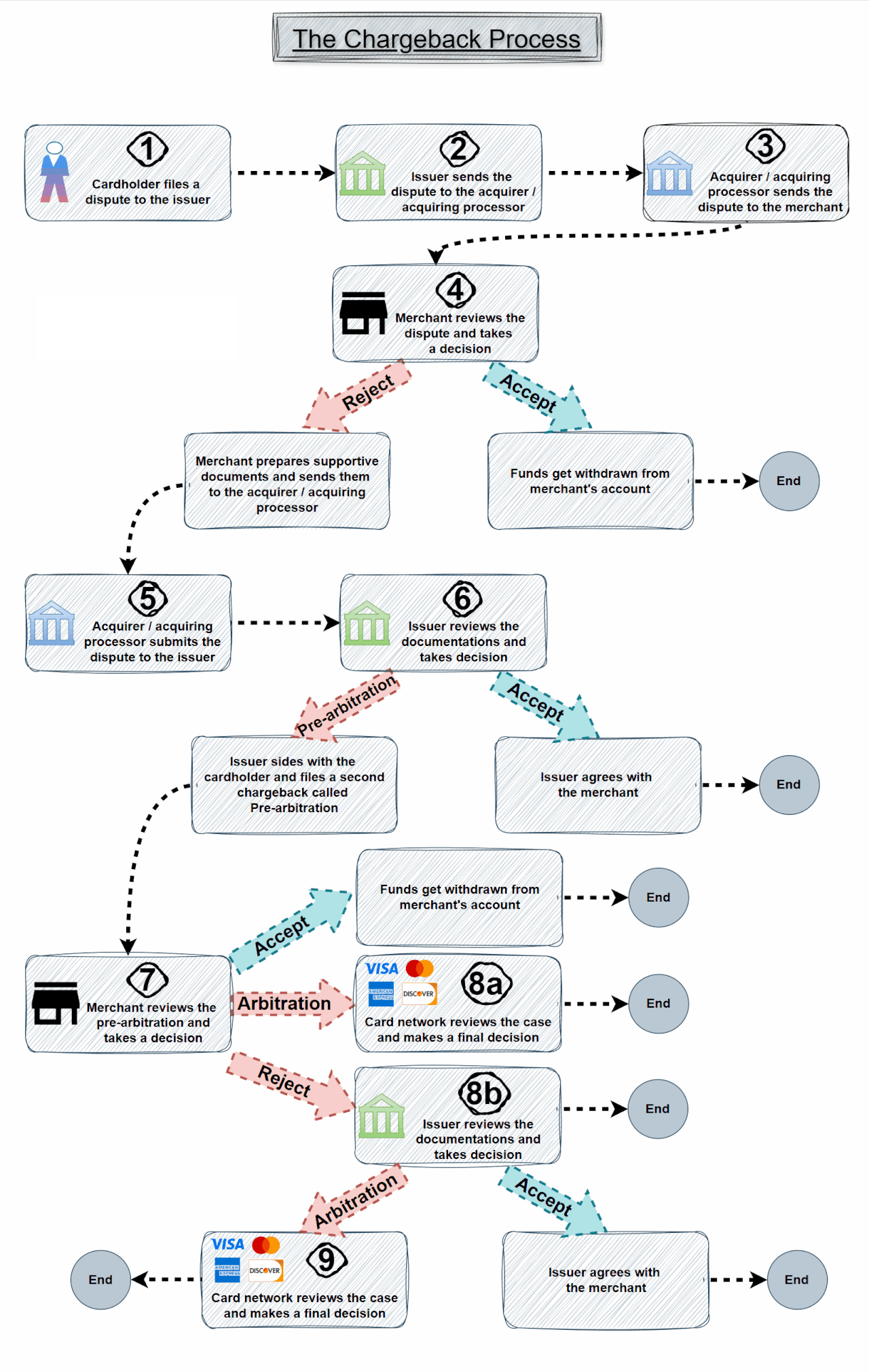
Here is what actually happens when a dispute is raised:
🔹You file a dispute with your issuer (in some cases the issuer can initiate disputes on your behalf).
🔹The issuer reviews your claim and sends the dispute to the acquirer. It is common for issuers to issue you a conditional refund from their reserves.
🔹The acquirer informs its merchant.
🔹The merchant reviews the chargeback and either accepts it and funds get withdrawn from its account, or rejects it and provides additional supportive documentations.
🔹The acquirer sends the merchant’s response to the issuer who reviews the new info and either accepts the merchant’s decision or files a second chargeback known by 𝑷𝒓𝒆-𝒂𝒓𝒃𝒊𝒕𝒓𝒂𝒕𝒊𝒐𝒏.
🔹The merchant can either accept the pre-arbitration, or reject the issuer’s decision and appeal to the card network for 𝑨𝒓𝒃𝒊𝒕𝒓𝒂𝒕𝒊𝒐𝒏.
🔹The card network reviews the case and makes a final decision. The party found liable for the dispute can be charged with high fees!
Lastly, many use the terms chargeback and dispute interchangeably. Each card network has it’s own terminology, for example Visa uses only the term Dispute and no longer uses the chargeback.
𝑫𝒊𝒔𝒑𝒖𝒕𝒆 can be defined as the action that consumers take when they contact the bank and make the claim that a transaction should be reversed. A 𝒄𝒉𝒂𝒓𝒈𝒆𝒃𝒂𝒄𝒌 is when the bank proceeds with the dispute claim and reverses the transaction. 𝑻𝒉𝒆 𝒄𝒉𝒂𝒓𝒈𝒆𝒃𝒂𝒄𝒌 𝒑𝒓𝒐𝒄𝒆𝒔𝒔 is all the steps that take place from the dispute all the way till the resolution of the dispute case.
Multiple parties are usually involved in the chargeback process:
🔹𝑪𝒐𝒏𝒔𝒖𝒎𝒆𝒓: the person claiming the dispute
🔹𝑴𝒆𝒓𝒄𝒉𝒂𝒏𝒕: the business who sold the items being disputed
🔹𝑰𝒔𝒔𝒖𝒆𝒓: the bank which issued the card to the consumer
🔹𝑨𝒄𝒒𝒖𝒊𝒓𝒆𝒓: the bank which acquires payments on behalf of the merchant
🔹𝑪𝒂𝒓𝒅 𝑵𝒆𝒕𝒘𝒐𝒓𝒌𝒔: the card institutions that oversee the transactions
🔹𝑷𝒓𝒐𝒄𝒆𝒔𝒔𝒐𝒓𝒔: the institutions (if any) that handle and process the chargebacks
Here is what actually happens when a dispute is raised:
🔹You file a dispute with your issuer (in some cases the issuer can initiate disputes on your behalf).
🔹The issuer reviews your claim and sends the dispute to the acquirer. It is common for issuers to issue you a conditional refund from their reserves.
🔹The acquirer informs its merchant.
🔹The merchant reviews the chargeback and either accepts it and funds get withdrawn from its account, or rejects it and provides additional supportive documentations.
🔹The acquirer sends the merchant’s response to the issuer who reviews the new info and either accepts the merchant’s decision or files a second chargeback known by 𝑷𝒓𝒆-𝒂𝒓𝒃𝒊𝒕𝒓𝒂𝒕𝒊𝒐𝒏.
🔹The merchant can either accept the pre-arbitration, or reject the issuer’s decision and appeal to the card network for 𝑨𝒓𝒃𝒊𝒕𝒓𝒂𝒕𝒊𝒐𝒏.
🔹The card network reviews the case and makes a final decision. The party found liable for the dispute can be charged with high fees!
Lastly, many use the terms chargeback and dispute interchangeably. Each card network has it’s own terminology, for example Visa uses only the term Dispute and no longer uses the chargeback.
